 BUSINESSTECHNOLOGYMicrosoft Ignite 2026: Satya Nadella Puts AI Agents, Copilot and Enterprise Cloud at the Centre of Microsoft's Next Technology RevolutionFlipFileZone · Read Fullopen_in_new
Building Scaffolding for LLMs and ADHD Brains: A Research-Backed Approach
Discover how Large Language Models (LLMs) and ADHD brains share similarities in forgetting instructions, and learn about a novel, open-source solution to address this challenge
FlipFileZone · TECHNOLOGY
shareShare this post






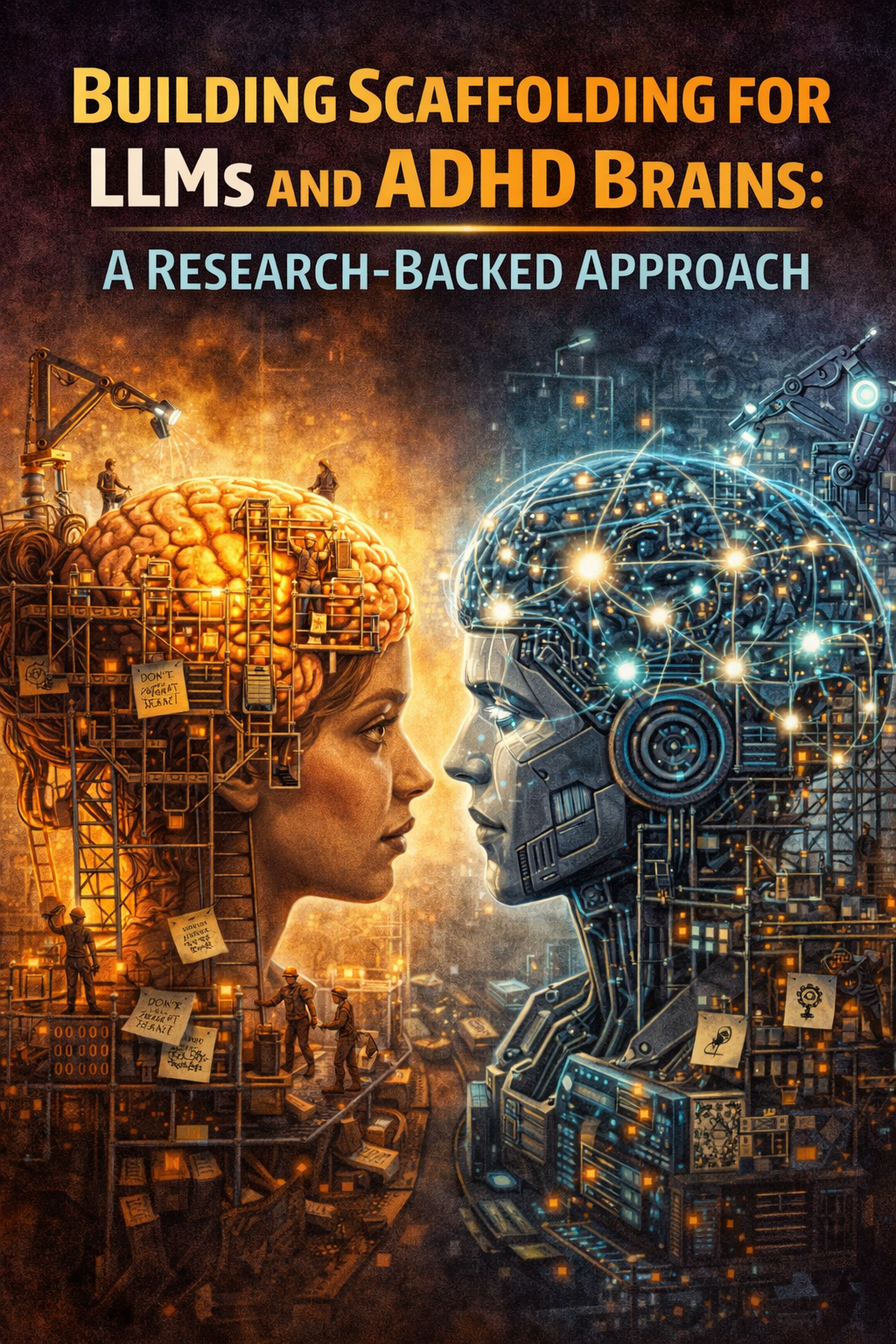
Building Scaffolding for LLMs and ADHD Brains: A Research-Backed Approach
Recent studies have revealed that Large Language Models (LLMs) and brains affected by Attention Deficit Hyperactivity Disorder (ADHD) share a common trait: they both struggle to retain instructions. This phenomenon has significant implications for the development of more efficient and effective LLMs, as well as for the creation of supportive tools for individuals with ADHD.
LLMs are artificial intelligence systems designed to process and generate human-like language. They have numerous applications, including language translation, text summarization, and chatbots. On the other hand, ADHD is a neurodevelopmental disorder characterized by symptoms such as inattention, hyperactivity, and impulsivity. While LLMs and ADHD may seem like unrelated concepts, research has shown that they share a common weakness: the tendency to forget instructions.
Forgetting instructions is a significant challenge for both LLMs and ADHD brains. In the case of LLMs, this can result in inconsistent or inaccurate responses, while for individuals with ADHD, it can lead to difficulties with task completion, organization, and time management. To address this challenge, it is essential to develop strategies that can help both LLMs and ADHD brains to better retain and follow instructions.
To overcome the challenge of forgetting instructions, I have developed a novel, open-source approach that involves building scaffolding for both LLMs and ADHD brains. This approach is based on the idea of providing a structured framework that can help to support and guide the processing of instructions. For LLMs, this scaffolding can take the form of algorithms and data structures that are designed to improve the retention and retrieval of instructions. For ADHD brains, the scaffolding can involve the use of cognitive aids, such as mind maps, checklists, and reminders, to help individuals stay organized and focused.
- Developing algorithms and data structures to improve instruction retention and retrieval in LLMs
- Creating cognitive aids, such as mind maps and checklists, to support individuals with ADHD
- Designing user-friendly interfaces to facilitate the use of scaffolding tools
In conclusion, the similarity between LLMs and ADHD brains in forgetting instructions presents a unique opportunity for innovation and collaboration. By developing scaffolding solutions that can support both LLMs and ADHD brains, we can create more efficient and effective systems, as well as improve the lives of individuals affected by ADHD. The open-source approach to this research ensures that the solutions developed can be widely adopted and adapted, leading to a greater impact and benefit for all.
shareShare this post
recommendYou may also like
BUSINESSTECHNOLOGYMicrosoft Ignite 2026: Satya Nadella Puts AI Agents, Copilot and Enterprise Cloud at the Centre of Microsoft's Next Technology RevolutionFlipFileZone · Read Fullopen_in_new BUSINESSTECHNOLOGYChina Uses American AI Models to Train Domestic Rivals as US Chip Restrictions Intensify the Global Artificial Intelligence RaceFlipFileZone · Read Fullopen_in_new
 BUSINESSTECHNOLOGYNvidia Leadership Turmoil Raises Concerns Over AI Industry Financing as Investors Rethink the Future of the AI BoomFlipFileZone · Read Fullopen_in_new
 TECHNOLOGYGovernor Gulab Chand Kataria launches Shaheed Bhagat Singh Youth Facilitation Centre in LudhianaFlipFileZone · Read Fullopen_in_new
 TECHNOLOGYInstinct AI Assistant Secures $350M Funding, Hits $2.5B Valuation in Record TimeFlipFileZone · Read Fullopen_in_new
 TECHNOLOGYXiaomi Unveils Xring Chip with TSMC Partnership, Redefining Its Global Hardware StrategyFlipFileZone · Read Fullopen_in_new
 TECHNOLOGYApple’s AI‑Powered Camera AirPods Could Launch in 2026, Not 2027FlipFileZone · Read Fullopen_in_new
chatPost a comment
Comments
0