 BUSINESSTECHNOLOGYMicrosoft Ignite 2026: Satya Nadella Puts AI Agents, Copilot and Enterprise Cloud at the Centre of Microsoft's Next Technology RevolutionFlipFileZone · Read Fullopen_in_new
FCC Approves Reflect Orbital's Space Mirror Satellite
The FCC has approved Reflect Orbital's plan to launch a satellite that uses a giant mirror to reflect sunlight to Earth after dark, despite objections from astronomers and environmental groups
FlipFileZone · TECHNOLOGY
shareShare this post


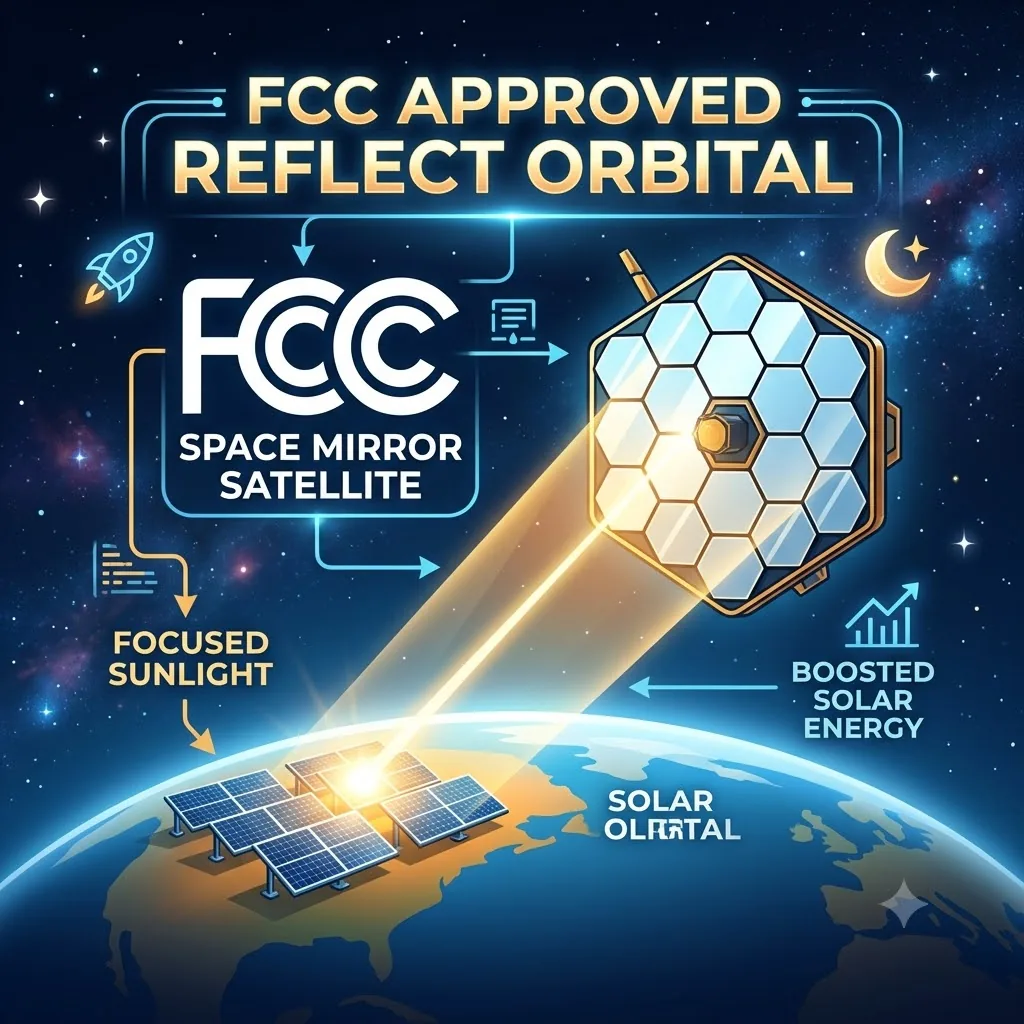
FCC Approves Reflect Orbital's Space Mirror Satellite
A New Era in Space Technology
The Federal Communications Commission (FCC) has granted California-based Reflect Orbital permission to launch and operate a controversial satellite that will use a giant mirror to reflect sunlight to Earth after dark. The satellite, dubbed Earendil-1, is meant to test Reflect Orbital's technology for shining sunlight back to Earth, with the goal of powering solar farms at night or illuminating disaster-struck areas after dark to help rescue teams.
The approval is only for one satellite, but Reflect Orbital envisions operating over 50,000 satellites by 2035, effectively surrounding the Earth with a fleet of mirrors. This proposal has faced stiff opposition from environmental groups and astronomers, who are concerned that the satellites will unleash intrusive light pollution and cause harm to amateur astronomers, drivers, and pilots.
✦✦✦
Concerns and Controversy
The American Astronomical Society has expressed concerns about the potential for eye damage to amateur astronomers looking through reasonably sized telescopes, as well as temporary 'flash blinding' of drivers and pilots. Additionally, the society has raised concerns about the negative impacts on scientific research being carried out by federally funded astronomical facilities.
Despite these concerns, the FCC has approved the satellite, noting that the grant is only for a single demonstration satellite to test an innovative technology that could advance American leadership in space. The FCC has stated that the concerns around Reflect Orbital's solar reflector are 'unrelated to the Commission's role in authorizing use of radiofrequency spectrum, and even if the Commission had authority to review and condition these operations (which it does not), these harms are unlikely to occur.'
The FCC's decision has significant implications for the future of space technology and the potential for light pollution. As Reflect Orbital moves forward with its plans to launch Earendil-1, it remains to be seen how the company will address the concerns of astronomers and environmental groups. One thing is certain, however: the launch of this satellite marks a new era in space technology, and its impact will be felt for years to come.
✦✦✦
The Future of Space Technology
The approval of Reflect Orbital's satellite is just the beginning of a new era in space technology. As companies like Reflect Orbital continue to push the boundaries of what is possible in space, it is likely that we will see more innovative technologies emerge. However, it is also important to consider the potential risks and challenges associated with these technologies, and to work towards finding solutions that balance the needs of industry and the environment.
The launch of Earendil-1 is a significant step forward for Reflect Orbital, and it marks an important milestone in the development of space-based technologies. As the company moves forward with its plans to launch additional satellites, it will be important to continue monitoring the situation and addressing the concerns of astronomers and environmental groups.
In conclusion, the FCC's approval of Reflect Orbital's satellite is a significant development in the field of space technology. While there are concerns about the potential impact of the satellite on the environment and astronomy, the launch of Earendil-1 marks an important step forward for the industry. As we move forward, it will be important to continue to monitor the situation and work towards finding solutions that balance the needs of industry and the environment.
shareShare this post
recommendYou may also like
BUSINESSTECHNOLOGYMicrosoft Ignite 2026: Satya Nadella Puts AI Agents, Copilot and Enterprise Cloud at the Centre of Microsoft's Next Technology RevolutionFlipFileZone · Read Fullopen_in_new BUSINESSTECHNOLOGYChina Uses American AI Models to Train Domestic Rivals as US Chip Restrictions Intensify the Global Artificial Intelligence RaceFlipFileZone · Read Fullopen_in_new
 BUSINESSTECHNOLOGYNvidia Leadership Turmoil Raises Concerns Over AI Industry Financing as Investors Rethink the Future of the AI BoomFlipFileZone · Read Fullopen_in_new
 TECHNOLOGYGovernor Gulab Chand Kataria launches Shaheed Bhagat Singh Youth Facilitation Centre in LudhianaFlipFileZone · Read Fullopen_in_new
 TECHNOLOGYInstinct AI Assistant Secures $350M Funding, Hits $2.5B Valuation in Record TimeFlipFileZone · Read Fullopen_in_new
 TECHNOLOGYXiaomi Unveils Xring Chip with TSMC Partnership, Redefining Its Global Hardware StrategyFlipFileZone · Read Fullopen_in_new
 TECHNOLOGYApple’s AI‑Powered Camera AirPods Could Launch in 2026, Not 2027FlipFileZone · Read Fullopen_in_new
chatPost a comment
Comments
0