 BUSINESSTECHNOLOGYMicrosoft Ignite 2026: Satya Nadella Puts AI Agents, Copilot and Enterprise Cloud at the Centre of Microsoft's Next Technology RevolutionFlipFileZone · Read Fullopen_in_new
Google's AI Struggles with Spelling
Google's AI can't spell its own name, revealing a deeper issue with language processing and the limitations of transformer-based architectures in understanding text as humans do
FlipFileZone · TECHNOLOGY
shareShare this post






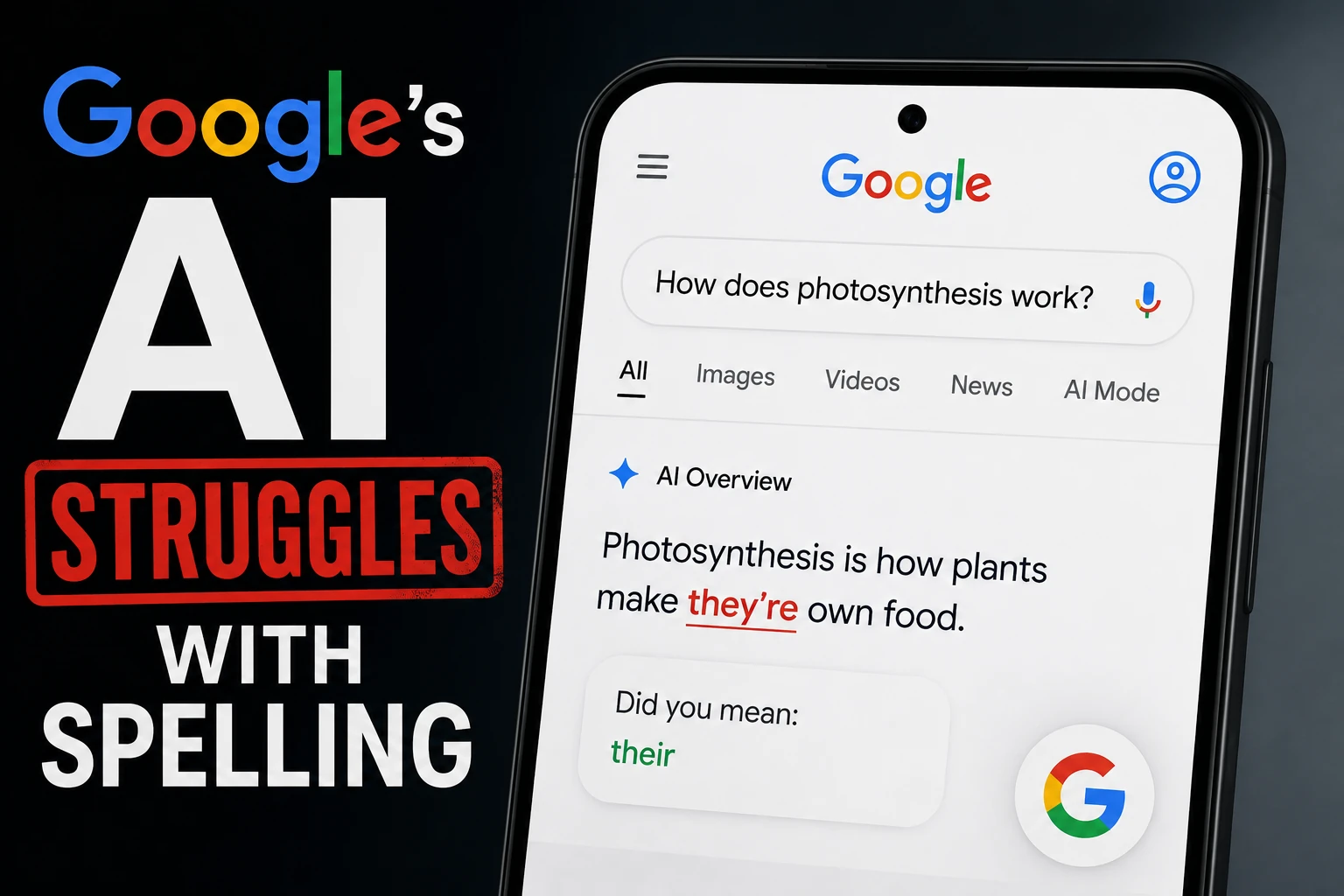
Google's AI Struggles with Spelling
The Spelling Struggle is Real
Google's AI has been making headlines for its inability to spell simple words, including its own name. This may seem like a minor issue, but it reveals a deeper problem with the way AI models process language. Despite being able to code an app in seconds or solve complex mathematical problems, these models are not built to understand spelling, leaving them as proficient as a kindergartener in this area.
The issue lies in the architecture of Large Language Models (LLMs), which are built on transformer models. These models break down text into tokens, which can be full words, syllables, or letters, depending on the model. Instead of reading text like a human, the AI converts it into numerical representations, making it difficult for the model to understand the relationship between letters and words.
✦✦✦
Understanding the Limitations of LLMs
Researchers have explained that LLMs are not designed to perceive sentences as units of language made up of words and letters. When a prompt is inputted, it's translated into an encoding, which is then contextualized to help the AI come up with a logical response. This means that the AI doesn't actually 'read' the text, but rather uses the encoding to generate a response.
LLMs are based on this transformer architecture, which notably is not actually reading text. What happens when you input a prompt is that it's translated into an encoding.
— Matthew Guzdial, AI researcher
Google has acknowledged the issue and is working to fix it. The company has already patched an issue where searching for the word 'disregard' would yield an incorrect definition. However, the spelling errors have remained, and it's unclear how long it will take to resolve the issue.
✦✦✦
The Future of AI and Language Processing
The limitations of LLMs highlight the need for further research and development in the field of natural language processing. As AI models become more prevalent in our daily lives, it's essential to address these issues to ensure that they can effectively communicate with humans. The future of AI depends on its ability to understand and process language in a way that's similar to humans, and it's clear that there's still a long way to go.
Google's AI struggles with spelling are a reminder that even the most advanced AI models have limitations. While they can process vast amounts of data and generate human-like text, they lack the nuance and understanding of language that humans take for granted. As we continue to develop and rely on AI models, it's essential to acknowledge and address these limitations to create more effective and efficient language processing systems.
shareShare this post
recommendYou may also like
BUSINESSTECHNOLOGYMicrosoft Ignite 2026: Satya Nadella Puts AI Agents, Copilot and Enterprise Cloud at the Centre of Microsoft's Next Technology RevolutionFlipFileZone · Read Fullopen_in_new BUSINESSTECHNOLOGYChina Uses American AI Models to Train Domestic Rivals as US Chip Restrictions Intensify the Global Artificial Intelligence RaceFlipFileZone · Read Fullopen_in_new
 BUSINESSTECHNOLOGYNvidia Leadership Turmoil Raises Concerns Over AI Industry Financing as Investors Rethink the Future of the AI BoomFlipFileZone · Read Fullopen_in_new
 TECHNOLOGYGovernor Gulab Chand Kataria launches Shaheed Bhagat Singh Youth Facilitation Centre in LudhianaFlipFileZone · Read Fullopen_in_new
 TECHNOLOGYInstinct AI Assistant Secures $350M Funding, Hits $2.5B Valuation in Record TimeFlipFileZone · Read Fullopen_in_new
 TECHNOLOGYXiaomi Unveils Xring Chip with TSMC Partnership, Redefining Its Global Hardware StrategyFlipFileZone · Read Fullopen_in_new
 TECHNOLOGYApple’s AI‑Powered Camera AirPods Could Launch in 2026, Not 2027FlipFileZone · Read Fullopen_in_new
chatPost a comment
Comments
0