 BUSINESSTECHNOLOGYMicrosoft Ignite 2026: Satya Nadella Puts AI Agents, Copilot and Enterprise Cloud at the Centre of Microsoft's Next Technology RevolutionFlipFileZone · Read Fullopen_in_new
Maine Sets Precedent: First State to Ban New Data Centers
Maine is poised to make history by becoming the first state in the US to ban the construction of new data centers, citing environmental concerns and energy consumption
FlipFileZone · TECHNOLOGY
shareShare this post






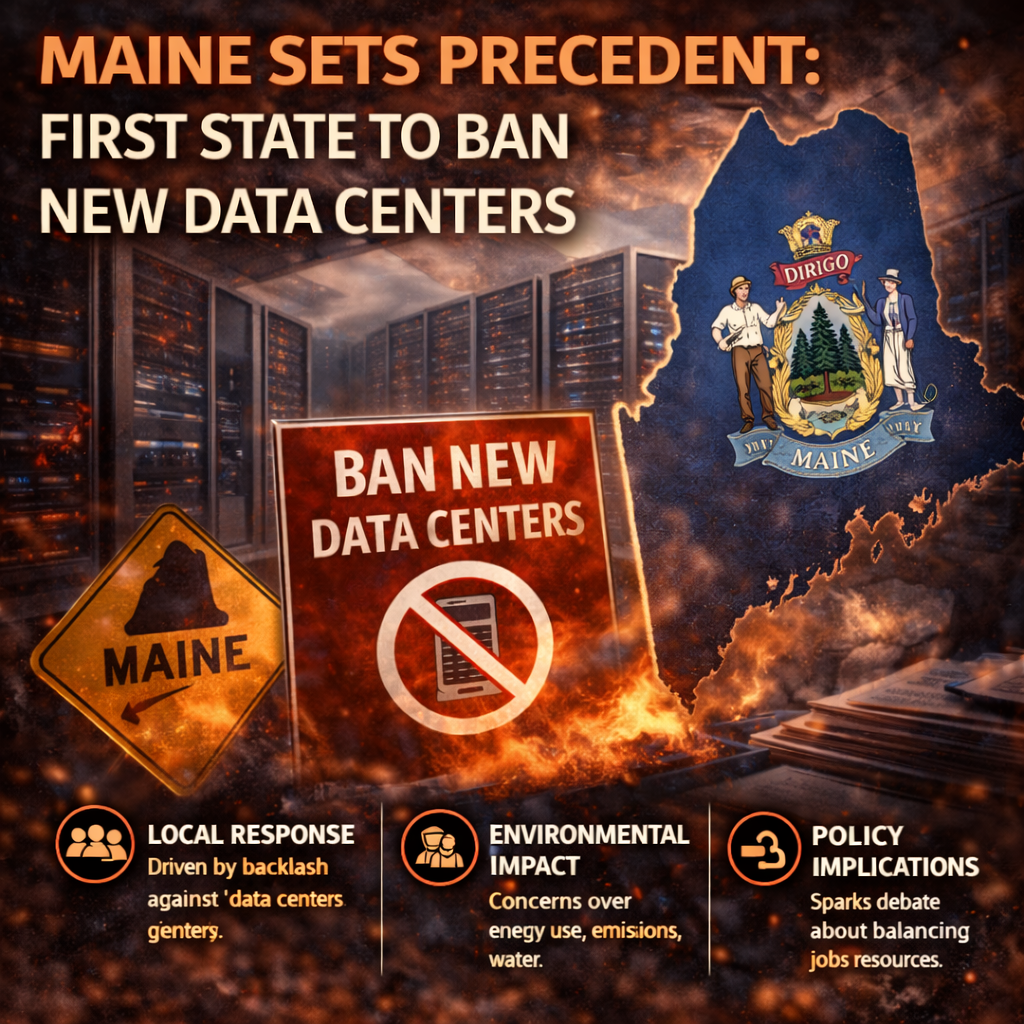
Maine Sets Precedent: First State to Ban New Data Centers
Maine is on the verge of making a groundbreaking decision that could have far-reaching implications for the tech industry. The state is set to become the first in the US to ban the construction of new data centers, in a bid to reduce its environmental footprint and mitigate the strain on its energy resources.
The move is seen as a significant step towards addressing the growing concerns around the environmental impact of data centers, which are notorious for their high energy consumption and e-waste generation. Proponents of the ban argue that it will help Maine to reduce its greenhouse gas emissions and protect its natural resources.
The ban on new data centers is expected to come into effect soon, and will apply to all new constructions, with some exceptions for existing facilities. The state has cited concerns over the high energy demands of data centers, which are estimated to account for a significant portion of Maine's energy consumption.
One of the primary drivers behind the ban is the environmental impact of data centers. These facilities require massive amounts of energy to power their operations, which is often generated by fossil fuels and contributes to greenhouse gas emissions. Additionally, data centers generate significant amounts of e-waste, including discarded servers, storage devices, and other equipment.
- High energy consumption: Data centers are estimated to account for around 2% of global energy consumption, which is comparable to the entire airline industry.
- Greenhouse gas emissions: The production and disposal of data center equipment contributes to greenhouse gas emissions, which exacerbate climate change.
- E-waste generation: Data centers generate significant amounts of e-waste, including toxic materials like lead, mercury, and cadmium.
The ban on new data centers in Maine is likely to have significant implications for the tech industry, which relies heavily on these facilities to store and process data. Companies may need to explore alternative locations for their data centers, or invest in more energy-efficient technologies to reduce their environmental footprint.
As the world becomes increasingly digital, the demand for data centers is likely to continue growing. However, with the growing awareness of environmental concerns, it is likely that other states and countries will follow Maine's lead and implement similar bans or regulations.
shareShare this post
recommendYou may also like
BUSINESSTECHNOLOGYMicrosoft Ignite 2026: Satya Nadella Puts AI Agents, Copilot and Enterprise Cloud at the Centre of Microsoft's Next Technology RevolutionFlipFileZone · Read Fullopen_in_new BUSINESSTECHNOLOGYChina Uses American AI Models to Train Domestic Rivals as US Chip Restrictions Intensify the Global Artificial Intelligence RaceFlipFileZone · Read Fullopen_in_new
 BUSINESSTECHNOLOGYNvidia Leadership Turmoil Raises Concerns Over AI Industry Financing as Investors Rethink the Future of the AI BoomFlipFileZone · Read Fullopen_in_new
 TECHNOLOGYGovernor Gulab Chand Kataria launches Shaheed Bhagat Singh Youth Facilitation Centre in LudhianaFlipFileZone · Read Fullopen_in_new
 TECHNOLOGYInstinct AI Assistant Secures $350M Funding, Hits $2.5B Valuation in Record TimeFlipFileZone · Read Fullopen_in_new
 TECHNOLOGYXiaomi Unveils Xring Chip with TSMC Partnership, Redefining Its Global Hardware StrategyFlipFileZone · Read Fullopen_in_new
 TECHNOLOGYApple’s AI‑Powered Camera AirPods Could Launch in 2026, Not 2027FlipFileZone · Read Fullopen_in_new
chatPost a comment
Comments
0