 BUSINESSTECHNOLOGYMicrosoft Ignite 2026: Satya Nadella Puts AI Agents, Copilot and Enterprise Cloud at the Centre of Microsoft's Next Technology RevolutionFlipFileZone · Read Fullopen_in_new
Microsoft Warns Global AI Infrastructure Shortages Could Continue Through 2026
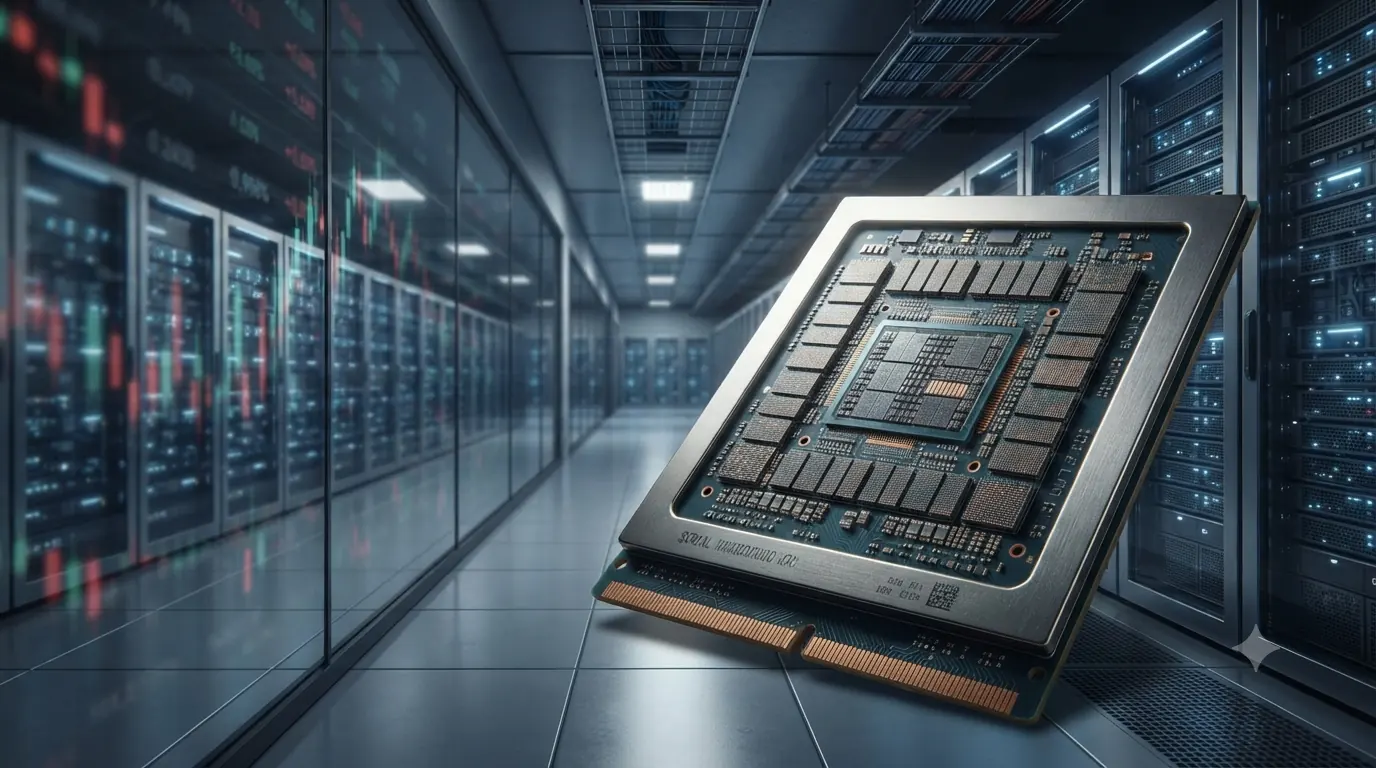
Microsoft warned investors that worldwide shortages involving GPUs, data centers, energy capacity, and AI infrastructure may continue through 2026 as artificial intelligence demand accelerates faster than supply chains can expand.
FlipFileZone · TECHNOLOGY
shareShare this post


Microsoft Warns Global AI Infrastructure Shortages Could Continue Through 2026
Microsoft Warns Global AI Infrastructure Shortages Could Continue Through 2026
Microsoft issued one of the clearest warnings yet about the growing pressure on global artificial intelligence infrastructure on May 14, 2026, after company executives acknowledged that shortages involving GPUs, AI servers, cloud computing resources, and data center capacity may continue through the rest of the year.
The announcement highlights one of the most important realities of the modern AI boom: demand for artificial intelligence infrastructure is expanding far faster than the world’s technology supply chains can currently support.
As companies, governments, startups, and research institutions rush to build and deploy advanced AI systems, the pressure on semiconductor manufacturing, cloud infrastructure, networking systems, and energy grids has intensified dramatically.
Microsoft’s warning reflects a much larger transformation occurring across the global economy.
Artificial intelligence is no longer simply a software industry trend. It has become an infrastructure race involving chips, electricity, networking hardware, data centers, cooling systems, cloud architecture, and semiconductor manufacturing capacity.
The companies capable of securing enough AI infrastructure may gain major competitive advantages in the coming decade.
Those unable to access sufficient computational resources could struggle to participate meaningfully in the next wave of AI innovation.
The AI Infrastructure Crisis
The rapid expansion of generative AI fundamentally changed infrastructure requirements across the technology industry.
Modern AI systems require enormous computational power. Training frontier large language models involves massive clusters of GPUs operating continuously inside hyperscale data centers.
Inference workloads for millions of users also consume enormous resources.
Unlike traditional enterprise software, AI systems require specialized infrastructure optimized specifically for machine learning workloads.
This includes high-performance GPUs, ultra-fast networking systems, advanced storage architecture, massive electricity capacity, and sophisticated cooling systems.
The sudden global surge in AI demand created bottlenecks across nearly every layer of the infrastructure ecosystem.
Technology companies now compete aggressively for access to GPUs, AI servers, semiconductor supply agreements, cloud compute capacity, and data center expansion opportunities.
Microsoft’s comments suggest these pressures may persist much longer than many investors originally expected.
Why GPUs Became So Important
At the center of the AI infrastructure shortage are GPUs.
Graphics processing units became essential for modern artificial intelligence because they can process large-scale parallel computations extremely efficiently. AI model training depends heavily on this capability.
Companies such as Nvidia dominate this market.
Demand for advanced AI chips exploded following the rapid adoption of generative AI systems. Cloud providers, startups, governments, and enterprises all began purchasing enormous quantities of GPUs simultaneously.
The result was a global supply imbalance.
Some companies reportedly faced months-long waiting periods to obtain sufficient AI hardware for model training and deployment. Smaller startups struggled especially hard as larger corporations secured priority access through long-term infrastructure agreements.
Microsoft itself remains one of the world’s largest buyers of AI infrastructure due to its partnership with OpenAI and its aggressive expansion of AI services across Azure and enterprise software platforms.
The company’s warning therefore carries major significance for investors and the broader technology industry.
The Explosion of AI Data Centers
One of the biggest consequences of the AI boom is the rapid expansion of hyperscale data centers.
Traditional cloud infrastructure was not originally designed for large-scale generative AI workloads. Modern AI systems require far higher computational density, networking throughput, and cooling capacity than standard enterprise applications.
As a result, technology companies are redesigning infrastructure architecture around AI acceleration.
Microsoft, Amazon, Google, Meta, Oracle, and other major cloud providers are investing hundreds of billions of dollars into AI-focused data center expansion.
These facilities contain enormous GPU clusters connected through advanced networking systems capable of supporting massive AI workloads.
However, building AI-ready infrastructure takes time.
Data center construction involves land acquisition, power agreements, cooling infrastructure, fiber connectivity, semiconductor procurement, and complex engineering coordination.
Supply chain delays involving transformers, networking hardware, cooling systems, and semiconductor components can slow expansion significantly.
Microsoft indicated that many of these bottlenecks continue affecting infrastructure deployment timelines globally.
The Energy Challenge
One of the most overlooked aspects of the AI infrastructure race is electricity.
Artificial intelligence workloads consume enormous amounts of power.
Training advanced AI models requires thousands of GPUs operating continuously for extended periods. Inference workloads serving millions of users also create ongoing electricity demands.
As AI adoption expands globally, data center energy consumption is increasing rapidly.
Utility providers and governments are now examining how AI infrastructure growth could affect electricity grids, renewable energy targets, and long-term sustainability planning.
Some regions are already experiencing concerns about whether local power infrastructure can support future hyperscale AI facilities.
Technology companies are increasingly signing renewable energy agreements, investing in energy-efficient hardware, and exploring alternative cooling technologies to manage growing operational demands.
Microsoft itself continues investing heavily in sustainability initiatives while expanding cloud and AI infrastructure globally.
Still, analysts believe energy availability may become one of the defining constraints of the AI era.
Cloud Computing Enters a New Era
Microsoft’s warning also reflects the broader transformation occurring within cloud computing.
Cloud platforms are evolving from general-purpose infrastructure providers into AI compute ecosystems.
Enterprise customers increasingly want cloud environments optimized specifically for generative AI deployment, model training, inference services, and automation workflows.
Azure, AWS, and Google Cloud are all racing to expand AI-specific infrastructure offerings.
Companies now compete not only on pricing and storage capacity, but also on GPU availability, model hosting capabilities, AI development tools, networking performance, and inference optimization.
Artificial intelligence has effectively become the new growth engine of the cloud industry.
Microsoft’s partnership with OpenAI positioned Azure as one of the leading infrastructure providers supporting frontier AI workloads.
That success also increased pressure on Microsoft to scale infrastructure rapidly enough to meet growing enterprise demand.
The OpenAI Effect
Much of the current infrastructure pressure stems from the explosive success of OpenAI and generative AI adoption.
When ChatGPT achieved mass global adoption, businesses quickly recognized the commercial potential of conversational AI systems.
Companies across healthcare, finance, cybersecurity, education, customer service, manufacturing, logistics, and software development accelerated AI investments almost immediately.
The result was a massive increase in demand for computational infrastructure.
Microsoft became one of the primary beneficiaries of this trend due to its close partnership with OpenAI and deep integration of AI across Microsoft products.
The company embedded AI capabilities into Windows, Office, GitHub, Teams, Azure, and enterprise software platforms.
However, scaling AI services for millions of users requires extraordinary infrastructure resources.
Microsoft’s warning demonstrates that even the world’s largest technology companies are struggling to keep pace with AI demand growth.
The Semiconductor Supply Chain Problem
The AI infrastructure shortage also exposed weaknesses in the global semiconductor supply chain.
Advanced AI chips require highly specialized manufacturing processes involving sophisticated lithography systems, advanced packaging technologies, and precision engineering.
The semiconductor ecosystem depends on an interconnected network of suppliers spread across multiple countries.
Chip design may occur in the United States, manufacturing equipment may come from Europe or Japan, fabrication could happen in Taiwan or South Korea, and assembly may involve multiple international partners.
This complexity creates vulnerabilities.
Geopolitical tensions, trade restrictions, natural disasters, manufacturing delays, or supply chain disruptions can affect infrastructure availability globally.
The United States and China are also engaged in an increasingly aggressive semiconductor rivalry involving export controls, AI chips, and strategic technology development.
Governments now view semiconductor infrastructure as a critical national security priority.
Why Investors Are Still Optimistic
Despite the infrastructure shortages, investors remain highly optimistic about the long-term growth potential of artificial intelligence.
Many analysts believe AI could become one of the largest economic transformations in modern history.
Businesses increasingly expect AI systems to improve productivity, automate workflows, accelerate research, enhance customer experiences, and reduce operational costs.
Consulting firms estimate that artificial intelligence could contribute trillions of dollars to global GDP over the next decade.
This optimism continues driving enormous capital investment into AI infrastructure companies.
Semiconductor manufacturers, cloud providers, networking firms, energy companies, and data center operators all benefited from growing expectations surrounding AI expansion.
Microsoft’s warning did not reduce enthusiasm for AI. Instead, it reinforced how enormous demand has become.
Many investors interpret the shortages themselves as evidence that the AI boom remains in its early stages.
The Future of AI Infrastructure
The next several years may determine which companies and countries dominate the AI infrastructure economy.
Technology firms are now competing to secure semiconductor manufacturing agreements, renewable energy capacity, cloud infrastructure expansion rights, and access to advanced networking systems.
Governments are funding domestic semiconductor initiatives designed to strengthen technological independence and reduce reliance on foreign infrastructure providers.
Meanwhile, new infrastructure technologies continue emerging.
Companies are developing more efficient AI chips, advanced cooling systems, optical networking solutions, liquid-cooled data centers, and specialized inference accelerators.
Cloud providers are also exploring custom AI hardware architectures to reduce dependence on external suppliers.
Still, infrastructure expansion remains enormously expensive.
Building hyperscale AI ecosystems requires billions of dollars in capital expenditure and long-term planning.
Only a relatively small number of companies possess the financial resources necessary to compete at the highest levels of the AI infrastructure market.
The Risk of Market Concentration
Some analysts worry that infrastructure shortages could increase market concentration within the AI industry.
Large corporations with access to enormous capital reserves can secure GPU supply agreements, build massive data centers, and negotiate favorable cloud infrastructure deals.
Smaller startups may struggle to compete for limited computational resources.
This dynamic could strengthen the dominance of major technology companies such as Microsoft, Google, Amazon, Meta, and Nvidia.
Governments and regulators are increasingly monitoring how infrastructure concentration could affect competition within future AI markets.
The availability of compute resources may become one of the most important competitive factors of the next decade.
Conclusion
Microsoft’s warning about continued AI infrastructure shortages highlights one of the defining realities of the artificial intelligence boom.
The world is entering an era where computational infrastructure has become as strategically important as software itself.
Artificial intelligence requires enormous quantities of GPUs, data centers, electricity, networking systems, and semiconductor manufacturing capacity.
Demand for these resources is growing faster than global supply chains can currently expand.
The result is a historic infrastructure race involving technology companies, governments, semiconductor manufacturers, cloud providers, and energy firms.
Microsoft’s comments demonstrate that even the largest corporations in the world are facing major scaling challenges as AI adoption accelerates globally.
The companies capable of solving these infrastructure constraints may ultimately shape the future of the AI economy.
One thing is already becoming clear: artificial intelligence is no longer just a software revolution. It is now an infrastructure revolution as well.
shareShare this post
recommendYou may also like
BUSINESSTECHNOLOGYMicrosoft Ignite 2026: Satya Nadella Puts AI Agents, Copilot and Enterprise Cloud at the Centre of Microsoft's Next Technology RevolutionFlipFileZone · Read Fullopen_in_new BUSINESSTECHNOLOGYChina Uses American AI Models to Train Domestic Rivals as US Chip Restrictions Intensify the Global Artificial Intelligence RaceFlipFileZone · Read Fullopen_in_new
 BUSINESSTECHNOLOGYNvidia Leadership Turmoil Raises Concerns Over AI Industry Financing as Investors Rethink the Future of the AI BoomFlipFileZone · Read Fullopen_in_new
 TECHNOLOGYGovernor Gulab Chand Kataria launches Shaheed Bhagat Singh Youth Facilitation Centre in LudhianaFlipFileZone · Read Fullopen_in_new
 TECHNOLOGYInstinct AI Assistant Secures $350M Funding, Hits $2.5B Valuation in Record TimeFlipFileZone · Read Fullopen_in_new
 TECHNOLOGYXiaomi Unveils Xring Chip with TSMC Partnership, Redefining Its Global Hardware StrategyFlipFileZone · Read Fullopen_in_new
 TECHNOLOGYApple’s AI‑Powered Camera AirPods Could Launch in 2026, Not 2027FlipFileZone · Read Fullopen_in_new
chatPost a comment
Comments
0