 BUSINESSTECHNOLOGYMicrosoft Ignite 2026: Satya Nadella Puts AI Agents, Copilot and Enterprise Cloud at the Centre of Microsoft's Next Technology RevolutionFlipFileZone · Read Fullopen_in_new
Misidentification in the Digital Age: The Concerning Case of AI Facial Recognition
A Tennessee woman's arrest using AI facial recognition technology for crimes allegedly committed in a state she claims to have never visited raises significant concerns about the reliability and implications of such technology in law enforcement.
FlipFileZone · TECHNOLOGY
shareShare this post






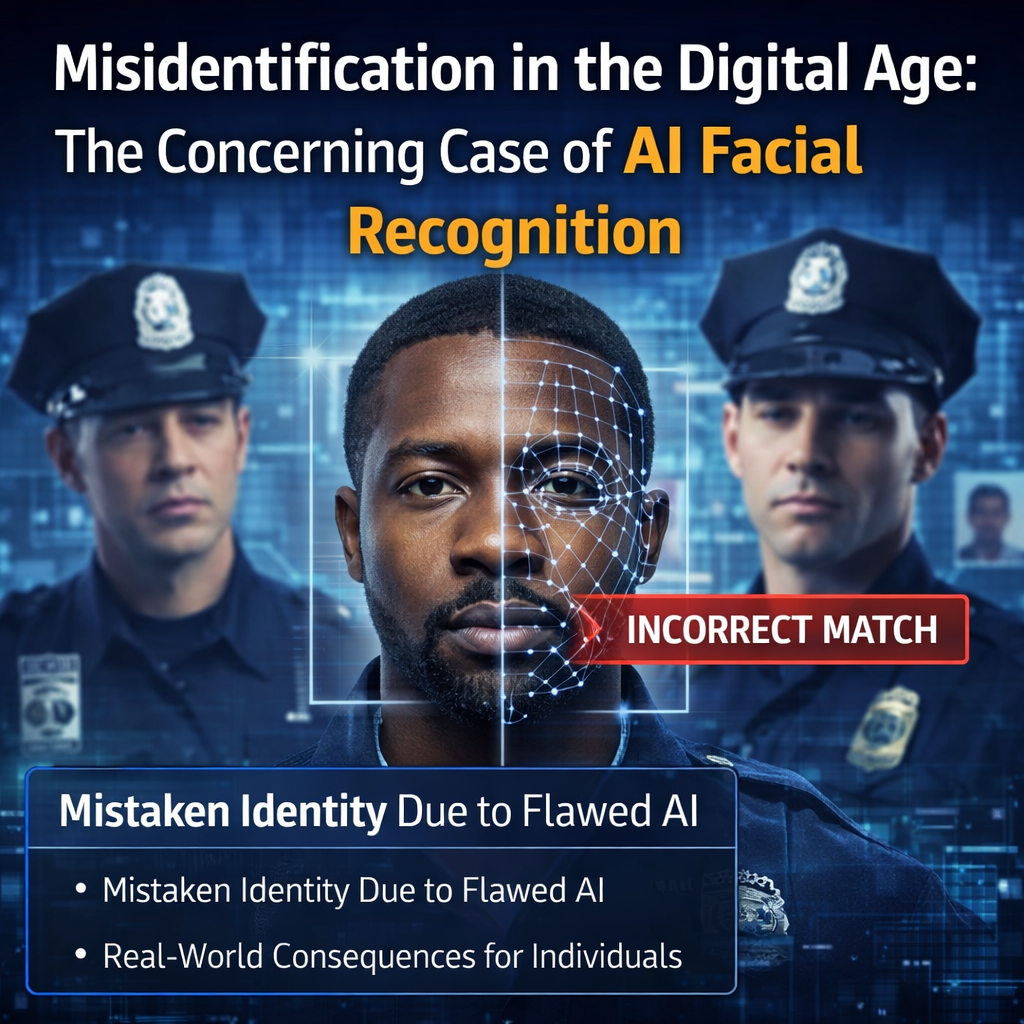
Misidentification in the Digital Age: The Concerning Case of AI Facial Recognition
The integration of artificial intelligence (AI) in law enforcement has introduced a new era of technological advancements aimed at enhancing public safety and solving crimes more efficiently. However, a recent case involving a Tennessee woman who was arrested based on AI facial recognition for crimes she allegedly committed in a state she claims to have never visited, highlights the potential pitfalls and inaccuracies of relying solely on this technology.
This incident underscores the critical need for a balanced approach, one that leverages technology while ensuring the protection of individual rights and the integrity of the judicial process. The use of AI in law enforcement must be scrutinized to prevent wrongful arrests and convictions, emphasizing the importance of human oversight and the consideration of all available evidence.
AI facial recognition technology is designed to identify individuals by analyzing facial features captured in images or videos. While it has shown promise in various applications, including security and law enforcement, its accuracy can be compromised by several factors, including the quality of the images used, lighting conditions, and the presence of disguises or obstructions.
The case of the Tennessee woman points to several concerns regarding the use of AI facial recognition in law enforcement. These include the potential for misidentification, the lack of transparency in how the technology is used, and the risk of exacerbating existing biases within the criminal justice system. It also raises questions about the legal framework governing the use of such technology and the need for stricter regulations to protect individual rights.
- Privacy and Civil Liberties: The use of AI facial recognition technology raises significant privacy concerns, as it can be used to monitor individuals without their knowledge or consent.
- Accuracy and Reliability: The technology is not infallible and can lead to wrongful identifications, especially in cases where the image quality is poor or when there are similarities in facial features among different individuals.
- Transparency and Accountability: There is a need for greater transparency in how AI facial recognition is used in law enforcement, including the protocols for its use, the assessment of its accuracy, and the mechanisms for addressing errors or biases.
The incident involving the Tennessee woman serves as a stark reminder of the challenges associated with the use of AI facial recognition in law enforcement. While technology has the potential to significantly enhance crime-solving capabilities, it is crucial that its use is carefully regulated and subject to rigorous testing to ensure accuracy and fairness. Moreover, there must be a commitment to protecting individual rights and preventing the misuse of such powerful technologies.
shareShare this post
recommendYou may also like
BUSINESSTECHNOLOGYMicrosoft Ignite 2026: Satya Nadella Puts AI Agents, Copilot and Enterprise Cloud at the Centre of Microsoft's Next Technology RevolutionFlipFileZone · Read Fullopen_in_new BUSINESSTECHNOLOGYChina Uses American AI Models to Train Domestic Rivals as US Chip Restrictions Intensify the Global Artificial Intelligence RaceFlipFileZone · Read Fullopen_in_new
 BUSINESSTECHNOLOGYNvidia Leadership Turmoil Raises Concerns Over AI Industry Financing as Investors Rethink the Future of the AI BoomFlipFileZone · Read Fullopen_in_new
 TECHNOLOGYGovernor Gulab Chand Kataria launches Shaheed Bhagat Singh Youth Facilitation Centre in LudhianaFlipFileZone · Read Fullopen_in_new
 TECHNOLOGYInstinct AI Assistant Secures $350M Funding, Hits $2.5B Valuation in Record TimeFlipFileZone · Read Fullopen_in_new
 TECHNOLOGYXiaomi Unveils Xring Chip with TSMC Partnership, Redefining Its Global Hardware StrategyFlipFileZone · Read Fullopen_in_new
 TECHNOLOGYApple’s AI‑Powered Camera AirPods Could Launch in 2026, Not 2027FlipFileZone · Read Fullopen_in_new
chatPost a comment
Comments
0