 BUSINESSTECHNOLOGYMicrosoft Ignite 2026: Satya Nadella Puts AI Agents, Copilot and Enterprise Cloud at the Centre of Microsoft's Next Technology RevolutionFlipFileZone · Read Fullopen_in_new
SpaceX Seeks Approval for Ambitious Solar-Powered Satellite Data Centers
SpaceX is seeking federal approval to launch an unprecedented 1 million solar-powered satellite data centers, revolutionizing the tech industry and transforming the way we access and store data
FlipFileZone · TECHNOLOGY
shareShare this post






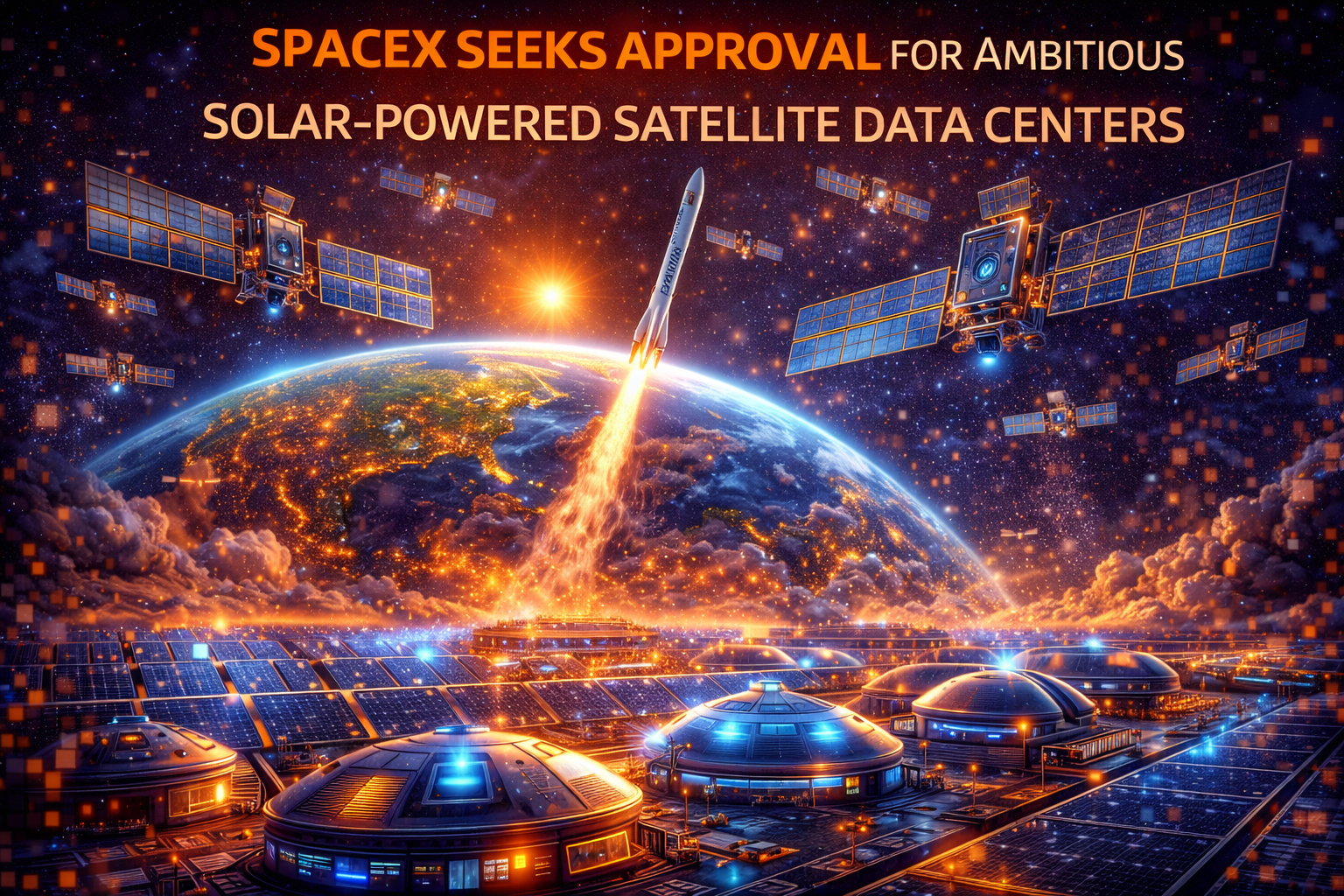
SpaceX Seeks Approval for Ambitious Solar-Powered Satellite Data Centers
SpaceX, a leading player in the private space industry, has submitted a proposal to the federal government for the launch of 1 million solar-powered satellite data centers. This ambitious project aims to provide global internet coverage and create a network of data storage facilities in orbit around the Earth.
The proposed satellite data centers will be powered by solar energy, reducing the company's reliance on non-renewable energy sources and minimizing its carbon footprint. The use of solar power will also enable the satellites to operate for extended periods without the need for refueling, making them a more sustainable option for long-term data storage.
Benefits of Solar-Powered Satellite Data Centers
The solar-powered satellite data centers proposed by SpaceX offer several benefits, including:
- Global internet coverage: The satellite data centers will provide internet access to remote and underserved areas, bridging the digital divide and enabling more people to access the internet.
- Enhanced data security: The use of solar-powered satellites will reduce the risk of data breaches and cyber attacks, as the data will be stored in a secure and isolated environment.
- Increased data storage capacity: The satellite data centers will provide a significant increase in data storage capacity, enabling businesses and individuals to store large amounts of data in a secure and accessible manner.
Challenges and Concerns
While the proposal for solar-powered satellite data centers is ambitious and innovative, there are several challenges and concerns that need to be addressed. These include:
- Regulatory hurdles: The launch of 1 million satellites will require regulatory approvals from various government agencies, which can be a time-consuming and complex process.
- Environmental impact: The launch of such a large number of satellites can have a significant impact on the environment, including the risk of space debris and interference with other satellites and spacecraft.
- Technical challenges: The development and deployment of solar-powered satellite data centers will require significant technological advancements, including the development of more efficient solar panels and energy storage systems.
shareShare this post
recommendYou may also like
BUSINESSTECHNOLOGYMicrosoft Ignite 2026: Satya Nadella Puts AI Agents, Copilot and Enterprise Cloud at the Centre of Microsoft's Next Technology RevolutionFlipFileZone · Read Fullopen_in_new BUSINESSTECHNOLOGYChina Uses American AI Models to Train Domestic Rivals as US Chip Restrictions Intensify the Global Artificial Intelligence RaceFlipFileZone · Read Fullopen_in_new
 BUSINESSTECHNOLOGYNvidia Leadership Turmoil Raises Concerns Over AI Industry Financing as Investors Rethink the Future of the AI BoomFlipFileZone · Read Fullopen_in_new
 TECHNOLOGYGovernor Gulab Chand Kataria launches Shaheed Bhagat Singh Youth Facilitation Centre in LudhianaFlipFileZone · Read Fullopen_in_new
 TECHNOLOGYInstinct AI Assistant Secures $350M Funding, Hits $2.5B Valuation in Record TimeFlipFileZone · Read Fullopen_in_new
 TECHNOLOGYXiaomi Unveils Xring Chip with TSMC Partnership, Redefining Its Global Hardware StrategyFlipFileZone · Read Fullopen_in_new
 TECHNOLOGYApple’s AI‑Powered Camera AirPods Could Launch in 2026, Not 2027FlipFileZone · Read Fullopen_in_new
chatPost a comment
Comments
0