 BUSINESSTECHNOLOGYMicrosoft Ignite 2026: Satya Nadella Puts AI Agents, Copilot and Enterprise Cloud at the Centre of Microsoft's Next Technology RevolutionFlipFileZone · Read Fullopen_in_new
Tesla Robotaxis Crash Rate Raises Concerns
A recent report indicates that Tesla's robotaxis are involved in accidents at a rate four times higher than human-driven vehicles, sparking debate about the safety and reliability of autonomous driving technology
FlipFileZone · TECHNOLOGY
shareShare this post






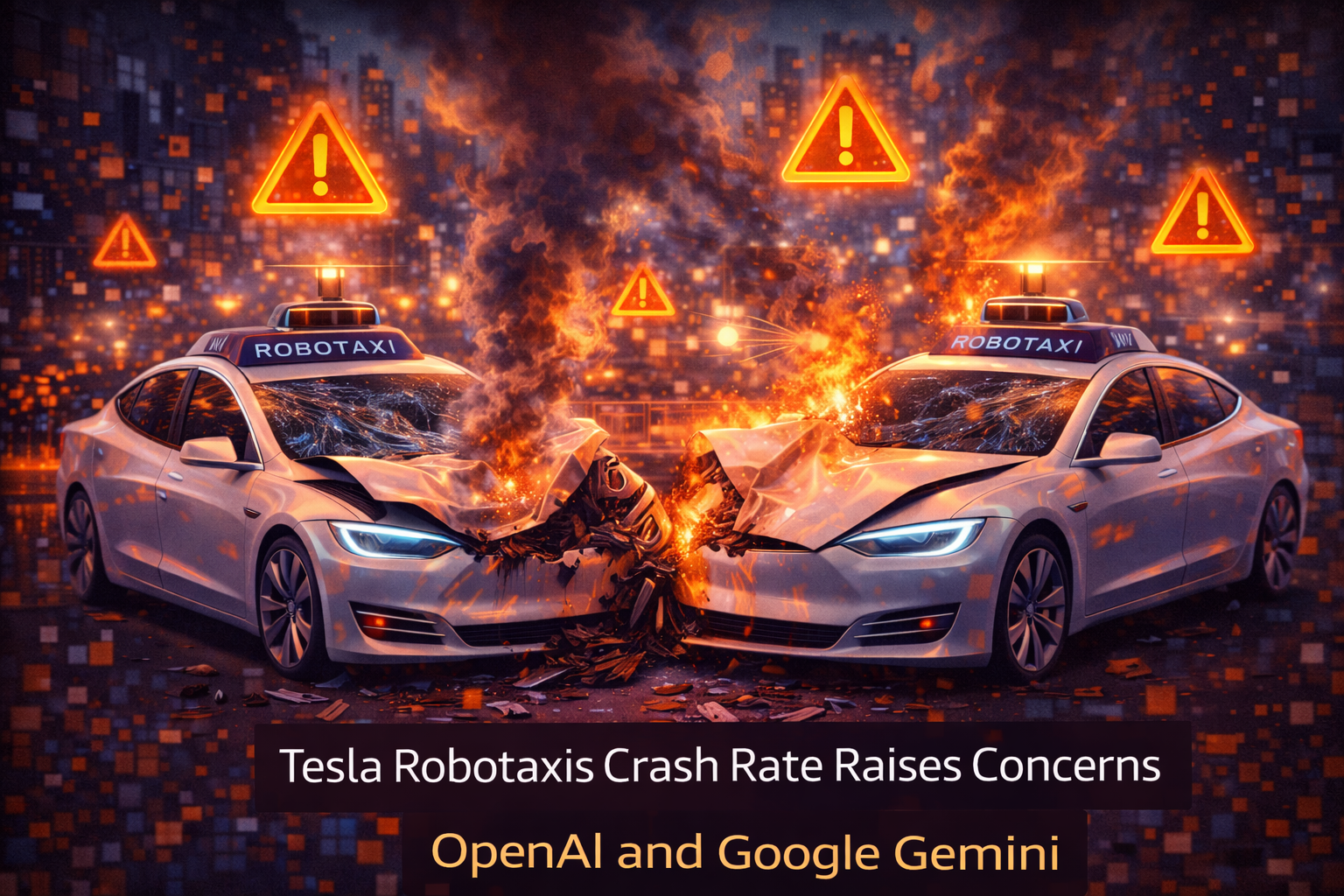
Tesla Robotaxis Crash Rate Raises Concerns
Tesla's robotaxis have been making headlines lately, but not necessarily for the right reasons. According to a recent report, these autonomous vehicles are crashing at a rate that's four times higher than human-driven cars. This alarming statistic has raised concerns about the safety and reliability of Tesla's autonomous driving technology.
The report highlights the need for improved safety measures and more rigorous testing of autonomous vehicles before they are allowed on public roads. While Tesla has been at the forefront of autonomous driving technology, the company's robotaxis have been involved in a disproportionately high number of accidents.
Safety Concerns
One of the primary concerns surrounding Tesla's robotaxis is their ability to detect and respond to unexpected situations on the road. The report suggests that the vehicles' autonomous systems may not be sophisticated enough to handle complex scenarios, resulting in a higher accident rate.
- Lack of human intuition: Autonomous vehicles rely on sensors and algorithms to navigate roads, but they often lack the intuition and common sense that human drivers take for granted.
- Insufficient testing: The report implies that Tesla's robotaxis may not have undergone sufficient testing to ensure their safety on public roads.
- Software glitches: Like any complex software system, Tesla's autonomous driving technology is not immune to glitches and errors, which can have serious consequences on the road.
Regulatory Implications
The report's findings have significant implications for regulators and the future of autonomous driving. If Tesla's robotaxis are indeed crashing at a rate four times higher than human-driven vehicles, it may prompt authorities to reexamine the company's testing protocols and safety standards.
shareShare this post
recommendYou may also like
BUSINESSTECHNOLOGYMicrosoft Ignite 2026: Satya Nadella Puts AI Agents, Copilot and Enterprise Cloud at the Centre of Microsoft's Next Technology RevolutionFlipFileZone · Read Fullopen_in_new BUSINESSTECHNOLOGYChina Uses American AI Models to Train Domestic Rivals as US Chip Restrictions Intensify the Global Artificial Intelligence RaceFlipFileZone · Read Fullopen_in_new
 BUSINESSTECHNOLOGYNvidia Leadership Turmoil Raises Concerns Over AI Industry Financing as Investors Rethink the Future of the AI BoomFlipFileZone · Read Fullopen_in_new
 TECHNOLOGYGovernor Gulab Chand Kataria launches Shaheed Bhagat Singh Youth Facilitation Centre in LudhianaFlipFileZone · Read Fullopen_in_new
 TECHNOLOGYInstinct AI Assistant Secures $350M Funding, Hits $2.5B Valuation in Record TimeFlipFileZone · Read Fullopen_in_new
 TECHNOLOGYXiaomi Unveils Xring Chip with TSMC Partnership, Redefining Its Global Hardware StrategyFlipFileZone · Read Fullopen_in_new
 TECHNOLOGYApple’s AI‑Powered Camera AirPods Could Launch in 2026, Not 2027FlipFileZone · Read Fullopen_in_new
chatPost a comment
Comments
0