 BUSINESSTECHNOLOGYMicrosoft Ignite 2026: Satya Nadella Puts AI Agents, Copilot and Enterprise Cloud at the Centre of Microsoft's Next Technology RevolutionFlipFileZone · Read Fullopen_in_new
The AI Responsibility Paradox: Rethinking Intelligence and Accountability
As AI technology advances, the focus on intelligence may be misguided, and the real challenge lies in ensuring responsibility and accountability in AI systems
FlipFileZone · TECHNOLOGY
shareShare this post






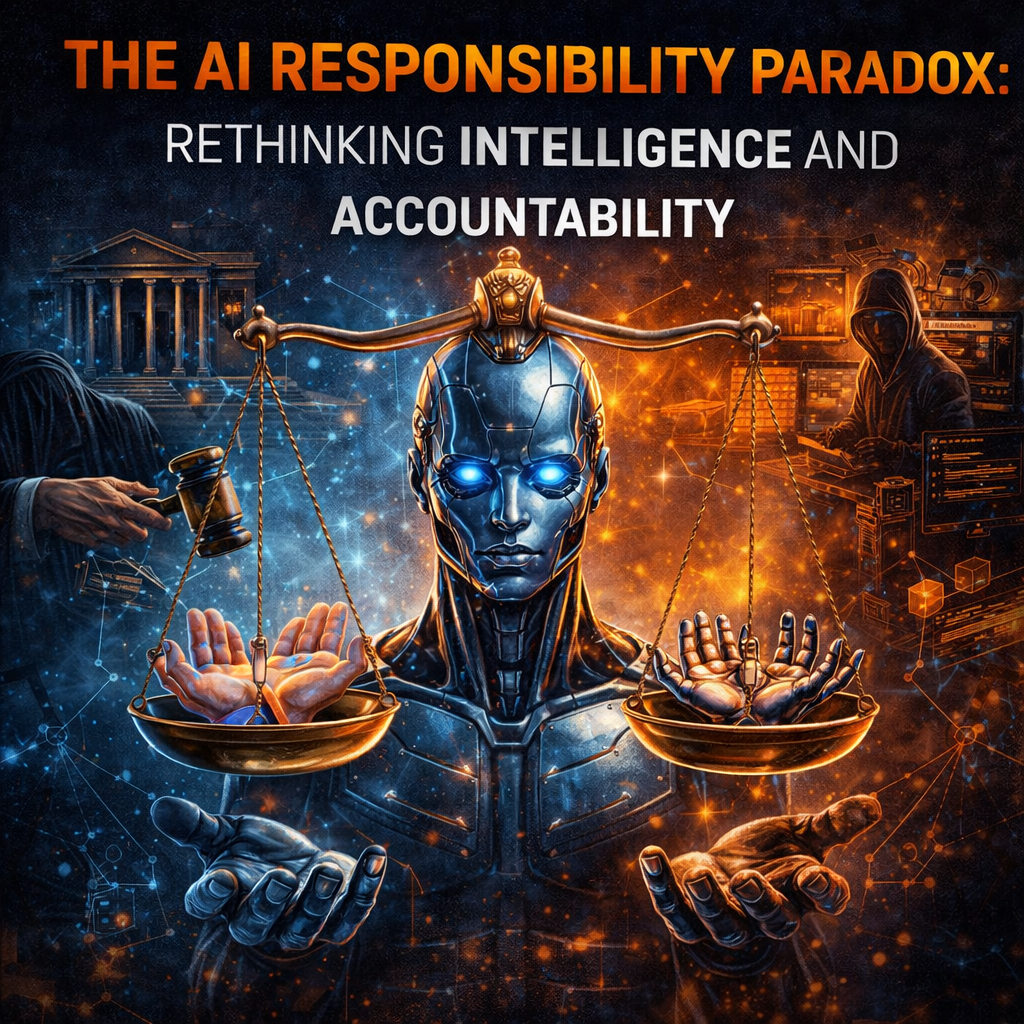
The AI Responsibility Paradox: Rethinking Intelligence and Accountability
The rapid development of artificial intelligence (AI) has sparked intense debate about its potential impact on society. While many experts worry about the dangers of superintelligent machines, others argue that the real AI problem is not intelligence, but responsibility.
One of the primary concerns surrounding AI is its potential to cause harm, whether intentionally or unintentionally. As AI systems become more autonomous and complex, the risk of accidents or malicious behavior increases. However, this risk is not inherent to AI itself, but rather a result of poor design, inadequate testing, and lack of accountability.
So, what does it mean for AI to be responsible? At its core, responsible AI refers to the development and deployment of AI systems that prioritize human well-being, safety, and dignity. This requires a fundamental shift in how we approach AI development, from a focus on intelligence and capability to a focus on accountability and transparency.
There are several key factors that contribute to responsible AI, including:
- Transparency: AI systems should be designed to provide clear and understandable explanations for their decisions and actions.
- Accountability: Developers and deployers of AI systems should be held accountable for any harm caused by their systems.
- Fairness: AI systems should be designed to avoid bias and discrimination, and to ensure that their decisions and actions are fair and just.
To ensure that AI systems are developed and deployed responsibly, we need to establish clear guidelines and regulations for AI development. This may include:
- Establishing industry-wide standards for AI development and deployment.
- Implementing robust testing and validation procedures to ensure that AI systems are safe and reliable.
- Providing education and training for AI developers and deployers on the importance of responsible AI.
Ultimately, the development and deployment of responsible AI requires a collaborative effort from industry, government, and civil society. By prioritizing accountability, transparency, and fairness, we can ensure that AI systems are developed and deployed in ways that benefit humanity as a whole.
shareShare this post
recommendYou may also like
BUSINESSTECHNOLOGYMicrosoft Ignite 2026: Satya Nadella Puts AI Agents, Copilot and Enterprise Cloud at the Centre of Microsoft's Next Technology RevolutionFlipFileZone · Read Fullopen_in_new BUSINESSTECHNOLOGYChina Uses American AI Models to Train Domestic Rivals as US Chip Restrictions Intensify the Global Artificial Intelligence RaceFlipFileZone · Read Fullopen_in_new
 BUSINESSTECHNOLOGYNvidia Leadership Turmoil Raises Concerns Over AI Industry Financing as Investors Rethink the Future of the AI BoomFlipFileZone · Read Fullopen_in_new
 TECHNOLOGYGovernor Gulab Chand Kataria launches Shaheed Bhagat Singh Youth Facilitation Centre in LudhianaFlipFileZone · Read Fullopen_in_new
 TECHNOLOGYInstinct AI Assistant Secures $350M Funding, Hits $2.5B Valuation in Record TimeFlipFileZone · Read Fullopen_in_new
 TECHNOLOGYXiaomi Unveils Xring Chip with TSMC Partnership, Redefining Its Global Hardware StrategyFlipFileZone · Read Fullopen_in_new
 TECHNOLOGYApple’s AI‑Powered Camera AirPods Could Launch in 2026, Not 2027FlipFileZone · Read Fullopen_in_new
chatPost a comment
Comments
0