 BUSINESSTECHNOLOGYMicrosoft Ignite 2026: Satya Nadella Puts AI Agents, Copilot and Enterprise Cloud at the Centre of Microsoft's Next Technology RevolutionFlipFileZone · Read Fullopen_in_new
The Future of Human-Created 3D Graphics: Trends and Opportunities
Human-created 3D graphics have been a staple of the entertainment and design industries for decades, but with the rise of AI-generated content, many are wondering if they still have a future
FlipFileZone · TECHNOLOGY
shareShare this post






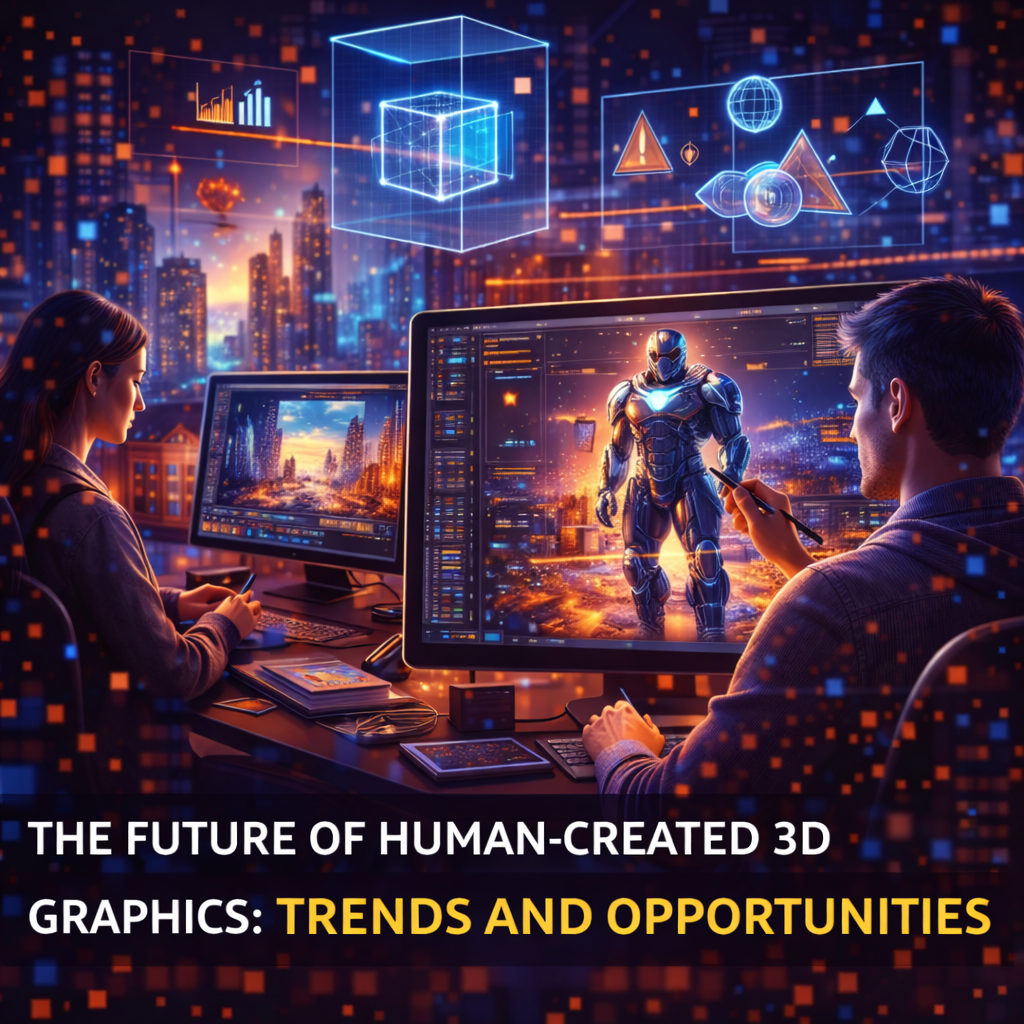
The Future of Human-Created 3D Graphics: Trends and Opportunities
Human-created 3D graphics have been a cornerstone of the entertainment and design industries for decades, from blockbuster films and video games to architectural visualizations and product designs. However, with the rapid advancement of artificial intelligence (AI) and machine learning (ML) technologies, many are wondering if human-created 3D graphics still have a future.
Despite the rise of AI-generated content, human-created 3D graphics continue to offer a level of creativity, originality, and emotional resonance that is difficult to replicate with automated tools. In this article, we will explore the current state of human-created 3D graphics, the challenges and opportunities posed by AI-generated content, and the future prospects for this field.
The Current State of Human-Created 3D Graphics
Human-created 3D graphics involve the use of specialized software and techniques to create three-dimensional models, animations, and visual effects. This field has evolved significantly over the years, with advancements in computer hardware, software, and rendering technologies enabling the creation of increasingly complex and realistic graphics.
Today, human-created 3D graphics are used in a wide range of applications, including:
- Film and television production
- Video game development
- Architectural visualization
- Product design and manufacturing
- Medical visualization and simulation
The Rise of AI-Generated Content
In recent years, AI-generated content has emerged as a significant trend in the field of 3D graphics. AI algorithms can be used to generate 3D models, textures, and animations with varying degrees of success, often at a fraction of the time and cost required for human-created content.
While AI-generated content has the potential to augment human creativity and productivity, it also poses significant challenges for human-created 3D graphics. For example:
- Job displacement: The increasing use of AI-generated content could lead to job displacement for human 3D artists and designers.
- Homogenization of style: The reliance on AI algorithms could result in a homogenization of style, as human creativity and originality are potentially stifled.
- Lack of emotional resonance: AI-generated content may lack the emotional resonance and depth that human-created content can provide.
The Future of Human-Created 3D Graphics
Despite the challenges posed by AI-generated content, human-created 3D graphics continue to have a bright future. As technology advances, human 3D artists and designers will be able to focus on higher-level creative tasks, such as:
- Concept development: Human creatives will be able to focus on developing innovative concepts and ideas, rather than spending time on tedious technical tasks.
- Style and aesthetics: Human 3D artists will be able to focus on developing unique and distinctive styles, rather than relying on AI algorithms.
- Emotional resonance: Human-created content will continue to provide a level of emotional resonance and depth that is difficult to replicate with AI-generated content.
In conclusion, while AI-generated content poses significant challenges for human-created 3D graphics, it also presents opportunities for growth and innovation. As technology continues to evolve, human 3D artists and designers will be able to focus on higher-level creative tasks, resulting in a future that is bright and full of possibilities.
shareShare this post
recommendYou may also like
BUSINESSTECHNOLOGYMicrosoft Ignite 2026: Satya Nadella Puts AI Agents, Copilot and Enterprise Cloud at the Centre of Microsoft's Next Technology RevolutionFlipFileZone · Read Fullopen_in_new BUSINESSTECHNOLOGYChina Uses American AI Models to Train Domestic Rivals as US Chip Restrictions Intensify the Global Artificial Intelligence RaceFlipFileZone · Read Fullopen_in_new
 BUSINESSTECHNOLOGYNvidia Leadership Turmoil Raises Concerns Over AI Industry Financing as Investors Rethink the Future of the AI BoomFlipFileZone · Read Fullopen_in_new
 TECHNOLOGYGovernor Gulab Chand Kataria launches Shaheed Bhagat Singh Youth Facilitation Centre in LudhianaFlipFileZone · Read Fullopen_in_new
 TECHNOLOGYInstinct AI Assistant Secures $350M Funding, Hits $2.5B Valuation in Record TimeFlipFileZone · Read Fullopen_in_new
 TECHNOLOGYXiaomi Unveils Xring Chip with TSMC Partnership, Redefining Its Global Hardware StrategyFlipFileZone · Read Fullopen_in_new
 TECHNOLOGYApple’s AI‑Powered Camera AirPods Could Launch in 2026, Not 2027FlipFileZone · Read Fullopen_in_new
chatPost a comment
Comments
0