 BUSINESSTECHNOLOGYMicrosoft Ignite 2026: Satya Nadella Puts AI Agents, Copilot and Enterprise Cloud at the Centre of Microsoft's Next Technology RevolutionFlipFileZone · Read Fullopen_in_new
The Unlikely Connection: LLM Failure Modes and ADHD Cognitive Science
Researchers have discovered a surprising overlap between the failure modes of Large Language Models and the cognitive science behind Attention Deficit Hyperactivity Disorder. This article explores six key parallels between the two fields, shedding light on the underlying mechanisms and potential implications.
FlipFileZone · TECHNOLOGY
shareShare this post






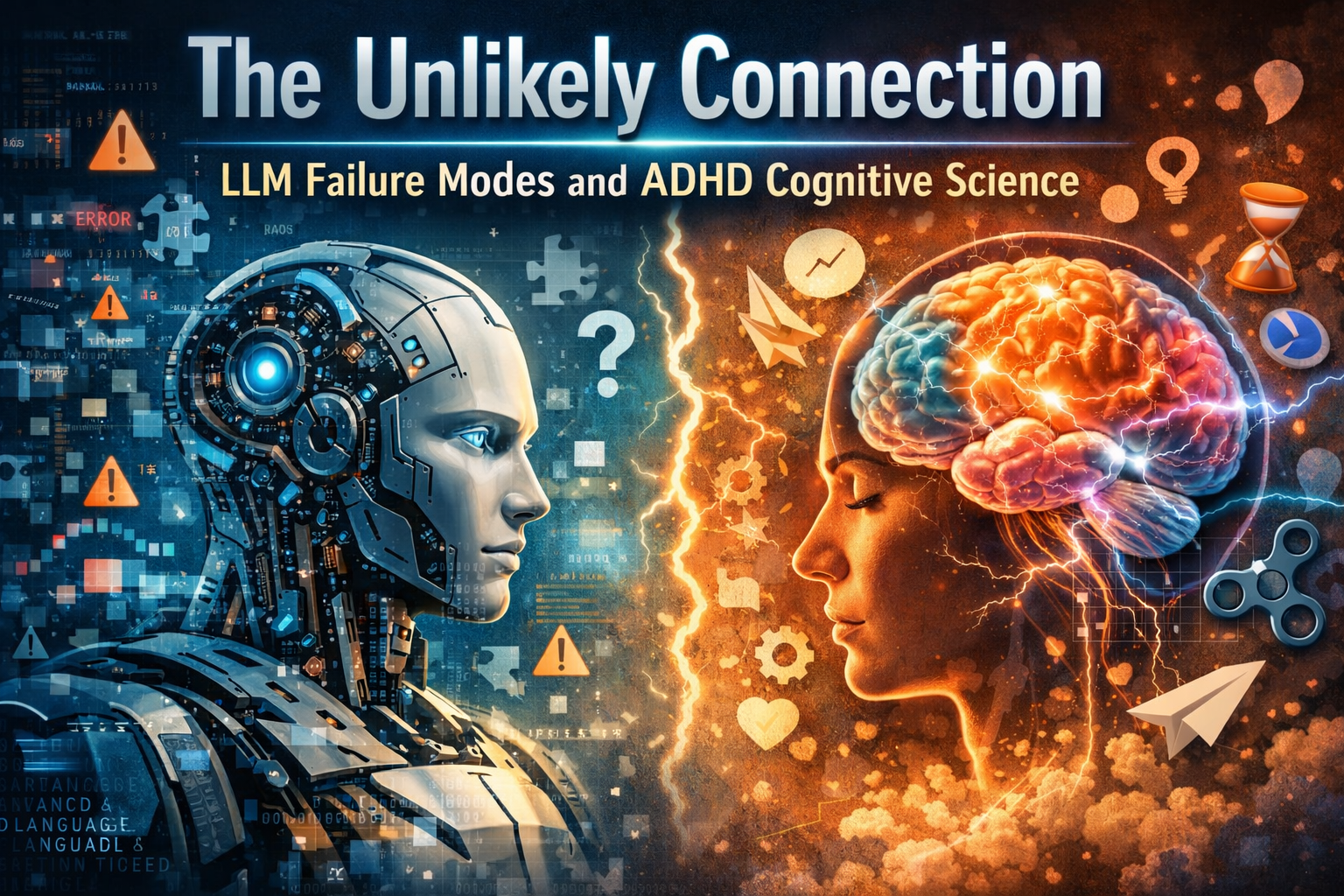
The Unlikely Connection: LLM Failure Modes and ADHD Cognitive Science
The rapid advancement of Large Language Models (LLMs) has led to significant breakthroughs in natural language processing, but it has also revealed a range of failure modes that can be both intriguing and concerning. Interestingly, these failure modes have been found to map surprisingly well onto the cognitive science of Attention Deficit Hyperactivity Disorder (ADHD).
Independent research has identified six key parallels between LLM failure modes and ADHD cognitive science. These parallels offer valuable insights into the underlying mechanisms of both LLMs and the human brain, and have significant implications for the development of more robust and human-like AI systems.
LLMs are sophisticated AI systems designed to process and generate human-like language. However, they are not immune to errors and can exhibit a range of failure modes, including biases, hallucinations, and adversarial attacks. These failure modes can be attributed to various factors, such as inadequate training data, flawed algorithms, and insufficient testing.
- Inattention and Distraction: LLMs can struggle with inattention and distraction, mirroring the cognitive challenges faced by individuals with ADHD. This can result in errors, biases, and a lack of focus in the generated text.
- Working Memory Limitations: LLMs have limited working memory capacity, which can lead to difficulties in processing and retaining information. Similarly, individuals with ADHD often struggle with working memory deficits, which can impact their ability to learn and retain information.
- Impulsivity and Hyperactivity: LLMs can exhibit impulsive and hyperactive behavior, generating text that is overly verbose, repetitive, or lacking in coherence. This is reminiscent of the impulsive and hyperactive behaviors often seen in individuals with ADHD.
- Emotional Dysregulation: LLMs can struggle with emotional dysregulation, leading to the generation of text that is overly emotional, aggressive, or insensitive. Similarly, individuals with ADHD often experience difficulties with emotional regulation, which can impact their relationships and overall well-being.
- Cognitive Flexibility and Adaptation: LLMs can struggle with cognitive flexibility and adaptation, finding it challenging to adjust to new contexts, tasks, or requirements. This is similar to the cognitive inflexibility often seen in individuals with ADHD, who may struggle to adapt to changes in their environment or routine.
- Self-Regulation and Monitoring: LLMs often lack self-regulation and monitoring capabilities, which can lead to the generation of text that is inaccurate, incomplete, or misleading. Similarly, individuals with ADHD may struggle with self-regulation and self-monitoring, which can impact their ability to complete tasks, manage time, and achieve goals.
The discovery of these parallels between LLM failure modes and ADHD cognitive science has significant implications for the development of more robust and human-like AI systems. By understanding the underlying mechanisms and challenges of both LLMs and the human brain, researchers can work towards creating AI systems that are more resilient, adaptable, and better equipped to handle complex tasks and situations.
shareShare this post
recommendYou may also like
BUSINESSTECHNOLOGYMicrosoft Ignite 2026: Satya Nadella Puts AI Agents, Copilot and Enterprise Cloud at the Centre of Microsoft's Next Technology RevolutionFlipFileZone · Read Fullopen_in_new BUSINESSTECHNOLOGYChina Uses American AI Models to Train Domestic Rivals as US Chip Restrictions Intensify the Global Artificial Intelligence RaceFlipFileZone · Read Fullopen_in_new
 BUSINESSTECHNOLOGYNvidia Leadership Turmoil Raises Concerns Over AI Industry Financing as Investors Rethink the Future of the AI BoomFlipFileZone · Read Fullopen_in_new
 TECHNOLOGYGovernor Gulab Chand Kataria launches Shaheed Bhagat Singh Youth Facilitation Centre in LudhianaFlipFileZone · Read Fullopen_in_new
 TECHNOLOGYInstinct AI Assistant Secures $350M Funding, Hits $2.5B Valuation in Record TimeFlipFileZone · Read Fullopen_in_new
 TECHNOLOGYXiaomi Unveils Xring Chip with TSMC Partnership, Redefining Its Global Hardware StrategyFlipFileZone · Read Fullopen_in_new
 TECHNOLOGYApple’s AI‑Powered Camera AirPods Could Launch in 2026, Not 2027FlipFileZone · Read Fullopen_in_new
chatPost a comment
Comments
0