 BUSINESSTECHNOLOGYMicrosoft Ignite 2026: Satya Nadella Puts AI Agents, Copilot and Enterprise Cloud at the Centre of Microsoft's Next Technology RevolutionFlipFileZone · Read Fullopen_in_new
Waymo's Secret to Overcoming Autonomous Vehicle Challenges: Human Intervention
Waymo's self-driving cars rely on human workers in the Philippines to intervene when the vehicles are stumped, highlighting the limitations of current autonomous technology
FlipFileZone · TECHNOLOGY
shareShare this post






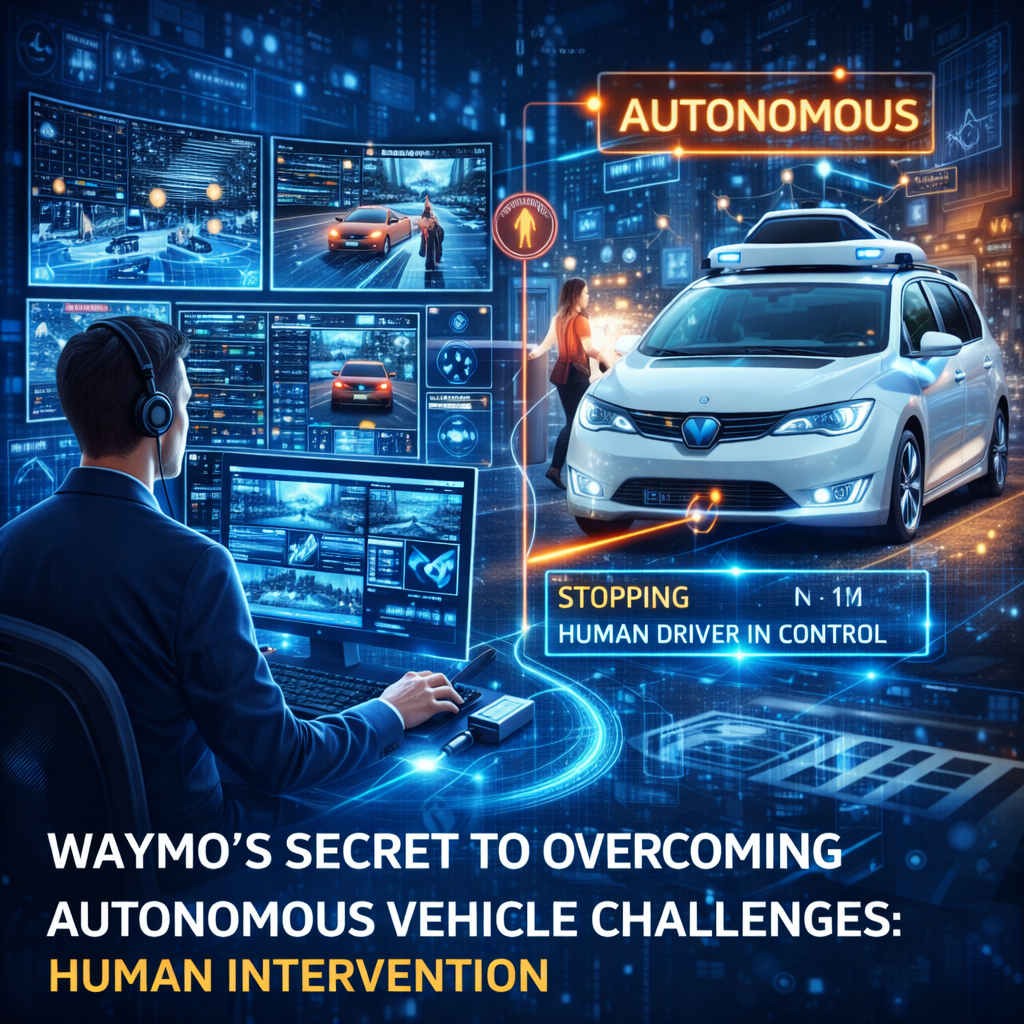
Waymo's Secret to Overcoming Autonomous Vehicle Challenges: Human Intervention
Recent reports have shed light on the fact that Waymo, a leading autonomous vehicle company, relies on human workers in the Philippines to intervene when their self-driving cars are unable to navigate certain situations.
This revelation has sparked interesting discussions about the current state of autonomous vehicle technology and the role of human intervention in overcoming its limitations.
Introduction to Waymo's Autonomous Vehicle Technology
Waymo's self-driving cars use a combination of sensors, mapping data, and artificial intelligence to navigate roads and make decisions in real-time. However, despite the sophistication of this technology, there are still situations that can stump the vehicles.
The Role of Human Workers in the Philippines
That's where the human workers in the Philippines come in. These workers are tasked with remotely monitoring the self-driving cars and intervening when necessary to help the vehicles navigate challenging situations. This can include things like construction zones, unusual traffic patterns, or unexpected events like a pedestrian stepping into the road.
- Human workers can provide real-time guidance to the self-driving cars, helping them to avoid obstacles and stay on course.
- The workers can also help to update the vehicles' mapping data, ensuring that the cars have the most accurate and up-to-date information about the road network.
- In some cases, the human workers may even take control of the vehicle remotely, allowing them to safely navigate the car through a difficult situation.
Implications for the Future of Autonomous Vehicle Technology
The fact that Waymo's self-driving cars rely on human intervention highlights the limitations of current autonomous vehicle technology. While the technology has made significant progress in recent years, it is clear that there is still a long way to go before self-driving cars can truly operate independently.
However, the use of human workers to support autonomous vehicle technology also presents opportunities for innovation and growth. By leveraging the strengths of both human and artificial intelligence, companies like Waymo can continue to push the boundaries of what is possible with self-driving cars.
In conclusion, the revelation that Waymo's self-driving cars rely on human workers in the Philippines to intervene when the vehicles are stumped is a reminder of the complexities and challenges of developing autonomous vehicle technology. However, it also highlights the potential for human and artificial intelligence to work together to create a safer and more efficient transportation system.
shareShare this post
recommendYou may also like
BUSINESSTECHNOLOGYMicrosoft Ignite 2026: Satya Nadella Puts AI Agents, Copilot and Enterprise Cloud at the Centre of Microsoft's Next Technology RevolutionFlipFileZone · Read Fullopen_in_new BUSINESSTECHNOLOGYChina Uses American AI Models to Train Domestic Rivals as US Chip Restrictions Intensify the Global Artificial Intelligence RaceFlipFileZone · Read Fullopen_in_new
 BUSINESSTECHNOLOGYNvidia Leadership Turmoil Raises Concerns Over AI Industry Financing as Investors Rethink the Future of the AI BoomFlipFileZone · Read Fullopen_in_new
 TECHNOLOGYGovernor Gulab Chand Kataria launches Shaheed Bhagat Singh Youth Facilitation Centre in LudhianaFlipFileZone · Read Fullopen_in_new
 TECHNOLOGYInstinct AI Assistant Secures $350M Funding, Hits $2.5B Valuation in Record TimeFlipFileZone · Read Fullopen_in_new
 TECHNOLOGYXiaomi Unveils Xring Chip with TSMC Partnership, Redefining Its Global Hardware StrategyFlipFileZone · Read Fullopen_in_new
 TECHNOLOGYApple’s AI‑Powered Camera AirPods Could Launch in 2026, Not 2027FlipFileZone · Read Fullopen_in_new
chatPost a comment
Comments
0