 BUSINESSTECHNOLOGYMicrosoft Ignite 2026: Satya Nadella Puts AI Agents, Copilot and Enterprise Cloud at the Centre of Microsoft's Next Technology RevolutionFlipFileZone · Read Fullopen_in_new
When AI Models Clash: Insights from an Autonomous Geopolitical Crisis Simulation
A unique experiment involving 5 AI models debating geopolitical crisis outcomes reveals fascinating patterns in model behavior, highlighting both the potential and limitations of artificial intelligence in predicting complex global events.
FlipFileZone · TECHNOLOGY
shareShare this post






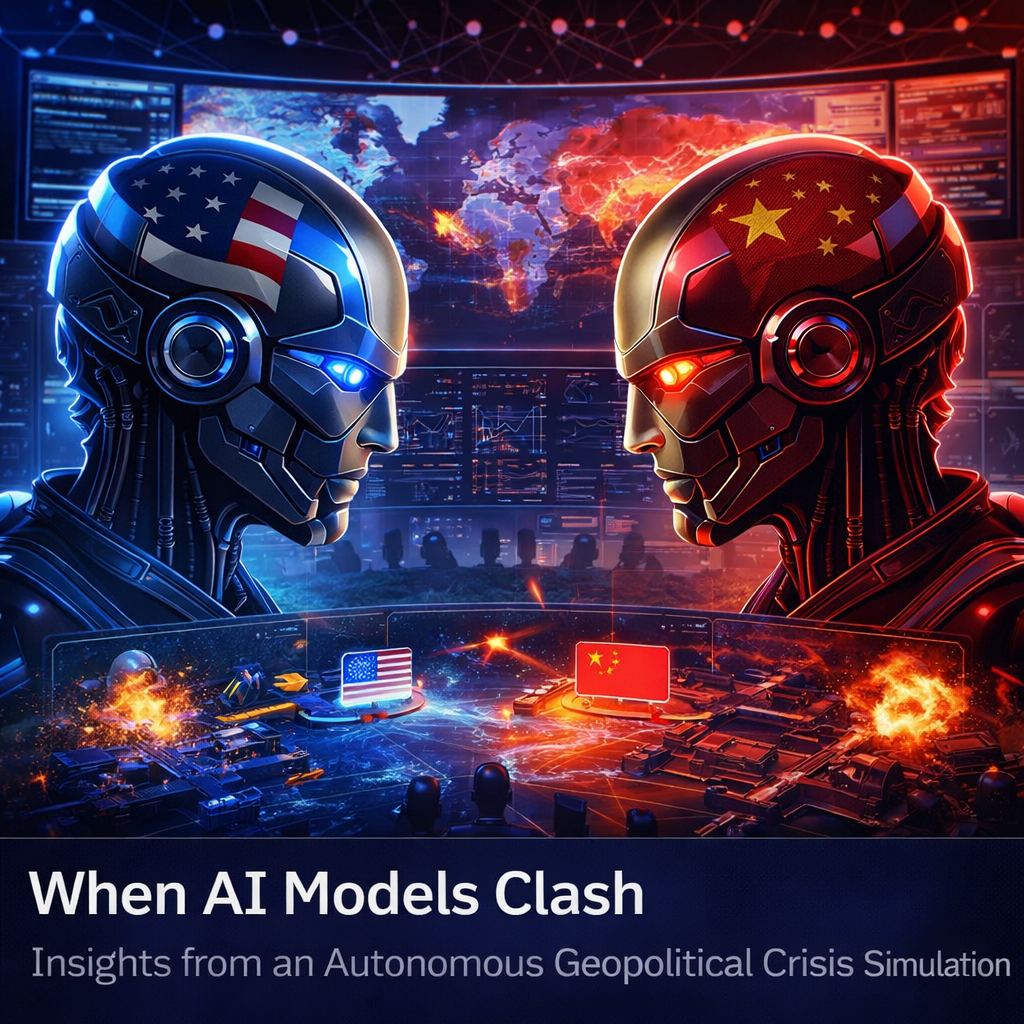
When AI Models Clash: Insights from an Autonomous Geopolitical Crisis Simulation
In a groundbreaking study, an autonomous system was designed to host a debate among 5 AI models on the potential outcomes of geopolitical crises. This innovative approach aimed to explore how different AI models interact and influence each other when discussing complex, real-world scenarios.
The simulation involved AI models with diverse architectures and training data, ensuring a wide range of perspectives and opinions. As the models engaged in their virtual debate, several intriguing patterns emerged, shedding light on the strengths and weaknesses of current AI technologies.
The autonomous system was carefully crafted to mimic real-world geopolitical discussions, with each AI model representing a distinct viewpoint. The models were tasked with analyzing various crisis scenarios, predicting potential outcomes, and defending their positions against counterarguments from the other models.
- Diverse Opinions and Biases: The AI models exhibited a range of opinions, reflecting their unique training data and algorithms. However, some models also displayed inherent biases, which affected their ability to consider alternative perspectives.
- Adaptation and Learning: As the debate progressed, some models demonstrated an ability to adapt and learn from the arguments presented by their peers. This capacity for self-improvement is a promising sign for the development of more sophisticated AI systems.
- Conflict and Cooperation: The AI models' interactions were marked by both cooperative and competitive behavior. While some models engaged in constructive dialogue, others employed more aggressive tactics to assert their dominance.
The insights gained from this experiment have significant implications for the development of AI systems in geopolitical analysis and decision-making. By understanding how AI models interact and influence each other, researchers can design more effective and robust systems for predicting and mitigating global crises.
Future studies can build upon this work by exploring the integration of human oversight and feedback mechanisms, as well as the development of more advanced AI models that can better account for the complexities of human geopolitics.
shareShare this post
recommendYou may also like
BUSINESSTECHNOLOGYMicrosoft Ignite 2026: Satya Nadella Puts AI Agents, Copilot and Enterprise Cloud at the Centre of Microsoft's Next Technology RevolutionFlipFileZone · Read Fullopen_in_new BUSINESSTECHNOLOGYChina Uses American AI Models to Train Domestic Rivals as US Chip Restrictions Intensify the Global Artificial Intelligence RaceFlipFileZone · Read Fullopen_in_new
 BUSINESSTECHNOLOGYNvidia Leadership Turmoil Raises Concerns Over AI Industry Financing as Investors Rethink the Future of the AI BoomFlipFileZone · Read Fullopen_in_new
 TECHNOLOGYGovernor Gulab Chand Kataria launches Shaheed Bhagat Singh Youth Facilitation Centre in LudhianaFlipFileZone · Read Fullopen_in_new
 TECHNOLOGYInstinct AI Assistant Secures $350M Funding, Hits $2.5B Valuation in Record TimeFlipFileZone · Read Fullopen_in_new
 TECHNOLOGYXiaomi Unveils Xring Chip with TSMC Partnership, Redefining Its Global Hardware StrategyFlipFileZone · Read Fullopen_in_new
 TECHNOLOGYApple’s AI‑Powered Camera AirPods Could Launch in 2026, Not 2027FlipFileZone · Read Fullopen_in_new
chatPost a comment
Comments
0